
Definitions and Additional Information
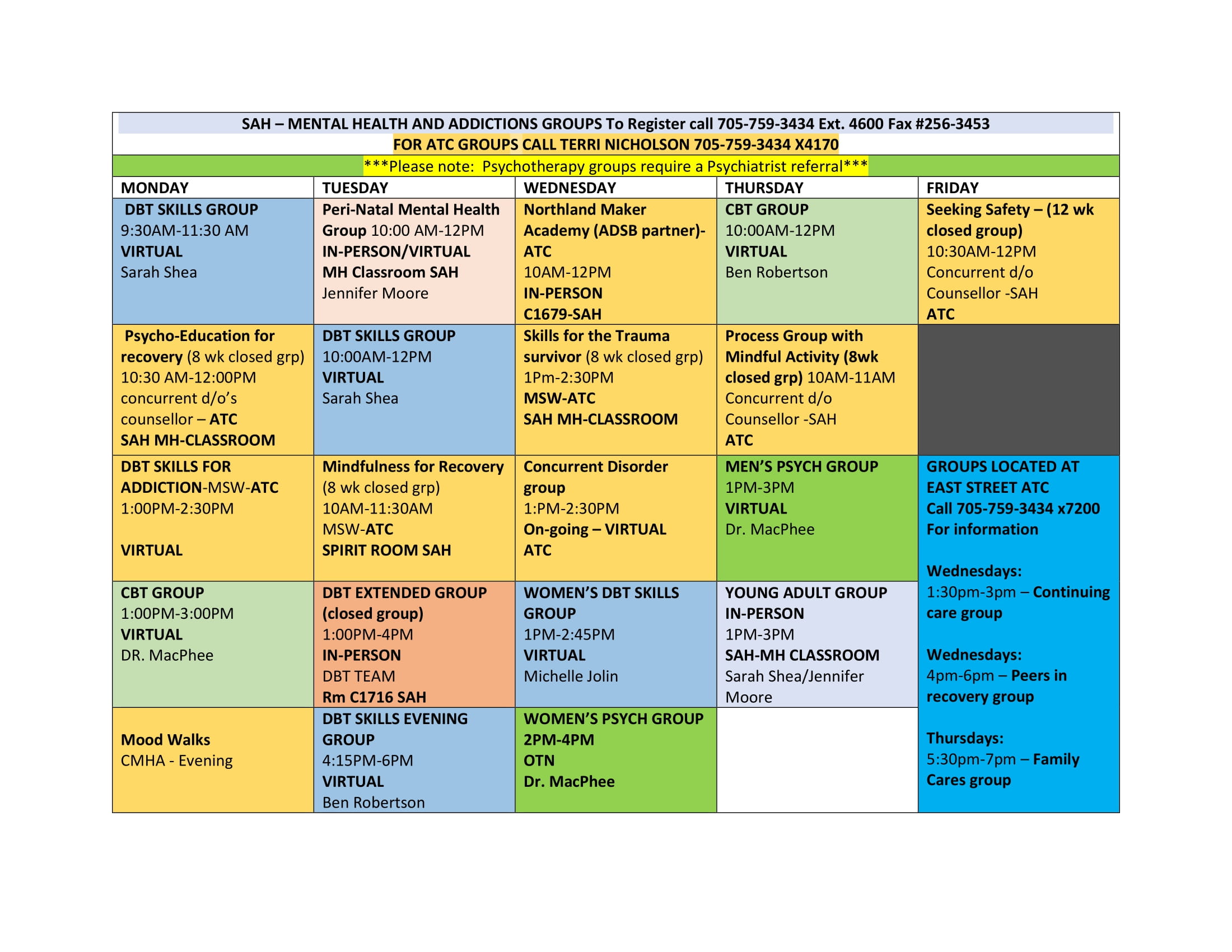
Covid 19 – All groups are currently offered via WebEx unless otherwise indicated by SAH room number.
Family Info Session – Occurs 5 PM-7 PM Third Thursday of every month.123 East Street. Contact 705-759-6684
Groups that require Psychiatrist referral indicated with an asterisk (*)
(CBT) Cognitive Behaviour Therapy is a practical, short-term form of psychotherapy. It helps people to develop skills and strategies for becoming and staying healthy. CBT focuses on the here-and-now—on the problems that come up in day-to-day life. CBT helps people to examine how they make sense of what is happening around them and how these perceptions affect the way they feel. CBT: is structured, time-limited (usually 6-20 sessions), problem-focused and goal-oriented. It teaches strategies and skills and is based on a proactive, shared therapeutic relationship between therapist and client
(CBT – E) Cognitive Behavioural Therapy for Eating Disorder Group is appropriate for adults (age 20+) with the diagnosis of Bulimia Nervosa, Anorexia Nervosa and Atypical Anorexia Nervosa. The group members need to be level 2 Eating Disorder Outpatient appropriate, based on medical monitoring appointment and intake assessment appointment. The group CBT-E is supported in the research for adult eating disorder treatment. The group is a 21 week group that is held one time per week. The group is scheduled for 2.5 hours per week. *Physician referral is required
(CD) Concurrent Disorders is for in and out patients who acknowledge they have substance abuse issues and a mental illness and want to make a positive change.
(DBT) Dialectical Behaviour Therapy is an evidence-based model of therapy that helps people learn and use new skills and strategies so that they build lives they feel are worth living.
DBT is based on core mindfulness skills and dialectics which lean toward acceptance and change. Components of DBT Skills Modules (each module-6 wks. in duration): (1) Interpersonal Effectiveness: teaches skills for building and maintaining healthy relationships (2) Distress Tolerance: how to tolerate pain in difficult situations, not change it (3) Emotion Regulation: strategies for balancing emotions, changing them, and enhancing resilience
Men’s/Women’s Psychotherapy Group is a low structure, process psychotherapy group providing a space for men recovering from mental disorders to process and share their feelings and experiences.
Perinatal Mental Healthy Weekly Support Group uses evidence based symptom management for peripartum mental health. This open support group is for individuals who are experiencing symptoms of postpartum anxiety, postpartum depression and/or or would like support with coping with a newborn. Some of the topics discussed in group focus on feelings of sadness and anxiety, postpartum experiences, mental health and wellness, comfort and encouragement with success stories, relationships, self-care, guilt and isolation. Participants can join in person (babies/toddlers welcome) or virtually.
(SS) Seeking Safety Group is an evidence-based group therapy designed for individuals experiencing both trauma and substance use issues who are motivated to make positive changes. The overall goal of the program is to help participants achieve safety in their relationships, thinking, behavior, and emotions.
This group is open to inpatient and outpatient clients and is facilitated by registered Social Workers with specialized training in addiction, trauma, and mental wellness. The facilitators bring over 15 years of combined experience to provide compassionate, evidence-based support throughout the recovery process.
Sessions are held every Monday from 10:00am – 12:00pm at SAH Mental Health Classroom C1679. This group is offered in a hybrid format, with both in-person and virtual attendance options available. While we welcome all participants, in-person attendance is encouraged to support the most engaging and effective experience.
Participants must not be under the influence of any intoxicating substances or experiencing psychosis during sessions. If you are unable to attend a scheduled session or would like more information, please contact Outpatient Mental Health at 705-759-3434 ext. 4600 | Fax: (705)256-3453
Referrals
- Self-referrals are welcomed by phone. Please call 705-759-3434 ext. 4600
- Health professionals can submit referrals using the Professional Referral Form
- New clients are welcomed to join at any time, as this is an ongoing group